
In retail, more choices don’t always mean more sales.
One of the biggest pitfalls in demand forecasting is product cannibalization—when the success of a new item simply eats into the sales of existing products in the same category. You launch what seems like a winning product, but instead of growing total sales, it just reshuffles them.
As retailers lean heavily on frequent product introductions to stay competitive, this challenge becomes even more critical—and more costly if overlooked.
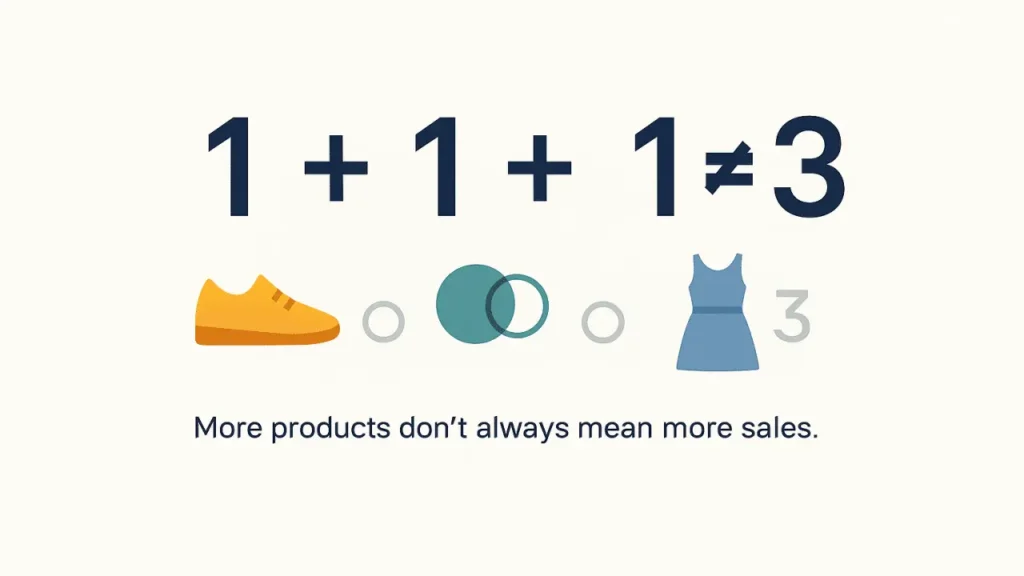
Here are three practical ways to spot and minimize cannibalization distortions in your forecasts:
1. Balance Top-Down Forecasting with Bottom-Up Insights
While aggregated (top-down) forecasts offer stability, they often mask store-level realities like cannibalization. For each category, pinpoint stores where expanding the assortment won’t drive incremental sales. These are your high-risk zones where more products could actually mean fewer total sales.
2. Measure “Effective Assortment” to Identify Saturation Points
Not every store benefits from a broader assortment. Calculate the effective assortment—the threshold where adding more SKUs stops boosting sales. Ranking stores by this metric helps highlight locations that are likely oversaturated and vulnerable to cannibalization.
3. Dive Deeper into Low Effective Assortment Stores
Stores showing low effective assortment deserve extra attention.
Check if your bestsellers are fully stocked and performing—gaps here can distort demand signals.
Benchmark the category’s performance against similar ones to spot anomalies.
Layer in external factors like shopper demographics, foot traffic, or even weather trends to uncover hidden demand constraints.
Product innovation shouldn’t come at the cost of total sales. By refining forecasting methods to account for cannibalization, retailers can make smarter assortment decisions—maximizing both variety and profitability.
If you’re looking to move beyond static forecasts and gain dynamic, store-level insights, it might be time to rethink your approach.
FAQs
What is the hidden risk in retail demand forecasting?
One of the biggest hidden risks in retail demand forecasting is relying too heavily on long-range predictions without adapting to real-time demand changes. Forecasts can become inaccurate when customer behavior, market trends, weather patterns, or local demand shift unexpectedly. Retailers that combine forecasting with real-time inventory optimization can make faster inventory decisions and reduce inventory risk.
Why do retailers still experience stockouts despite accurate forecasts?
Even accurate forecasts cannot fully prevent stockouts because demand changes at the store and SKU level happen continuously. Inventory allocation delays, supply chain disruptions, and regional demand differences can create product shortages. Real-time inventory execution helps retailers respond faster by adjusting replenishment and allocation decisions as demand evolves.
How can retailers improve demand forecasting accuracy?
Retailers can improve demand forecasting accuracy by combining historical sales data with real-time inventory and customer demand signals. AI-driven retail systems continuously analyze product performance across locations and channels, helping retailers make more responsive inventory decisions. This approach supports better product availability, lower excess inventory, and stronger sell-through performance.


