What You Will Learn:
- How to identify the “hidden” profit sitting in underperforming store shelves.
- The difference between manual transfers and AI-driven inventory balancing.
- Specific best practices to reduce stockouts without increasing your total inventory investment.
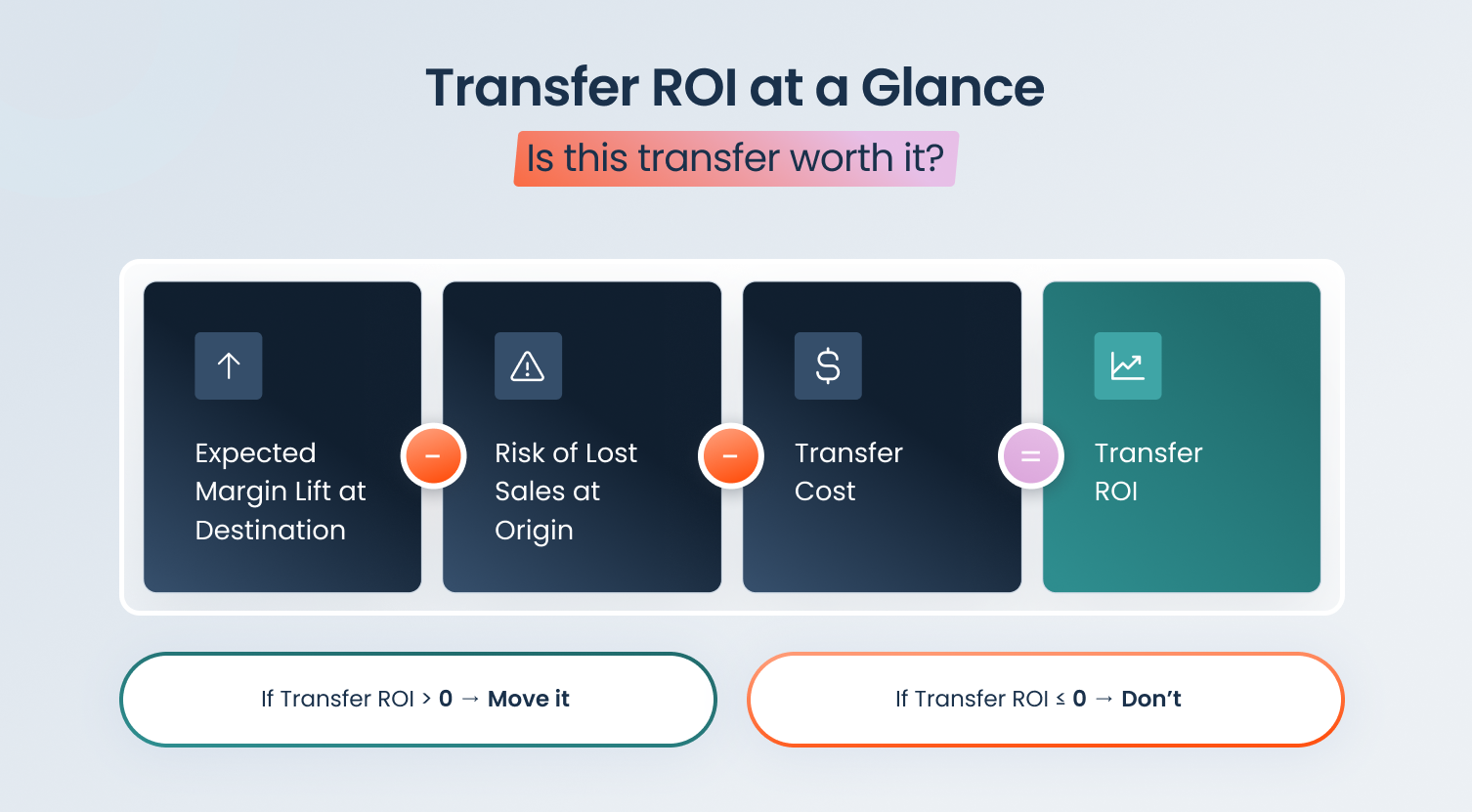
- How to calculate the ROI of a transfer versus the cost of a markdown.
What is an Interstore Inventory Transfer?
An interstore inventory transfer is the strategic movement of stock from one retail location to another to meet localized demand. Rather than ordering new units from a warehouse or vendor, retailers “balance” their existing inventory by shifting items from a store where they are overstocked to a store where they are selling quickly.
When executed correctly, these transfers act as a safety valve for your supply chain. They ensure that your capital isn’t gathering dust in one zip code while customers in another are walking away empty-handed. By treating your entire store network as a single pool of inventory, you increase your agility and decrease the need for emergency reorders.
The Hidden Costs of Poor Inventory Transfer Practices
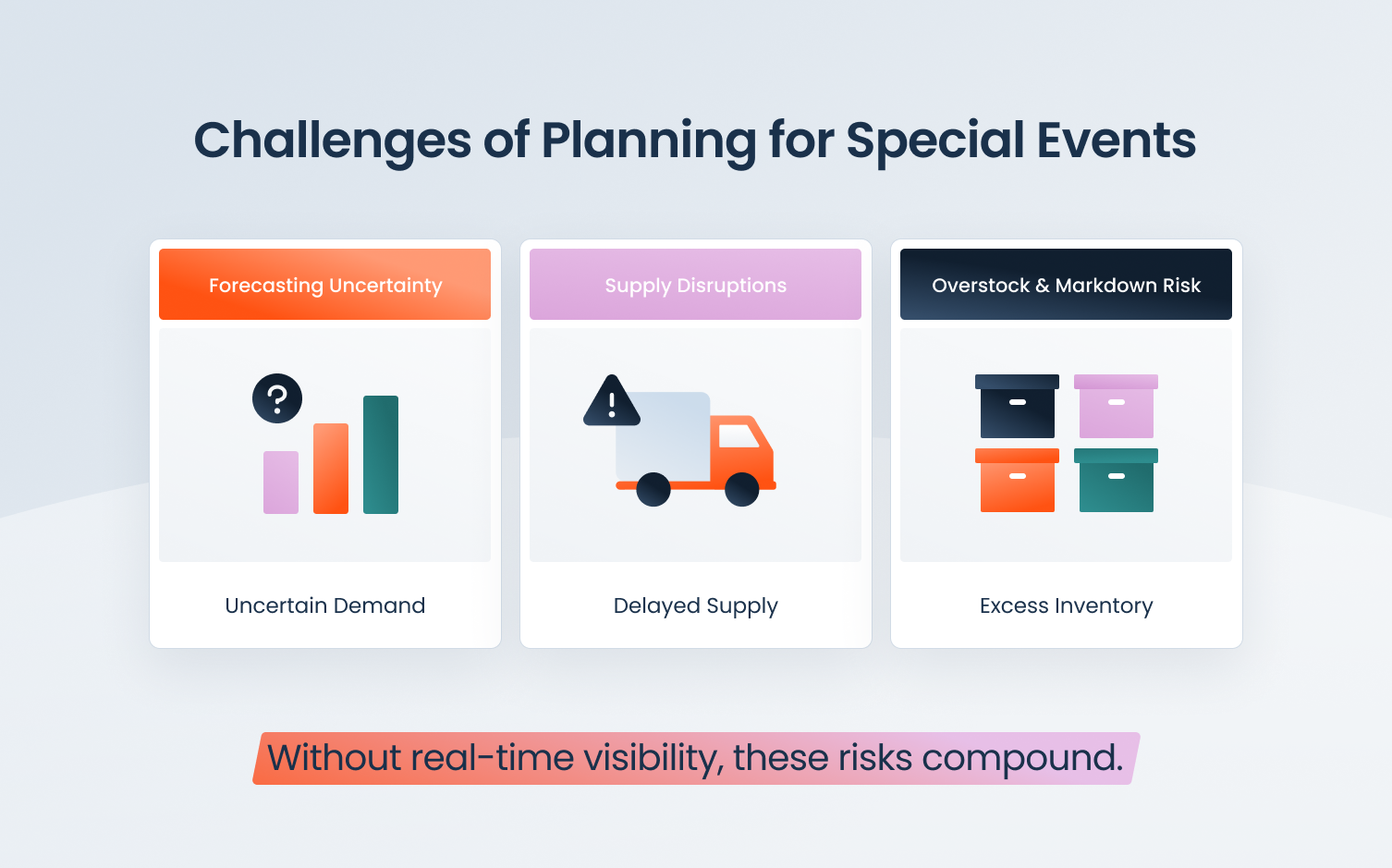
Poor inventory transfer practices drain retail margins through high logistics costs, “ghost inventory” errors, and missed sales opportunities. If your transfer process is slow or manual, the item often arrives at the destination store after the peak demand window has closed, leading to immediate markdowns.
Furthermore, shipping low-margin items between stores can actually cost more in labor and freight than the profit the item generates. Without real-time data, retailers often engage in “circular transfers”(moving stock back and forth without a clear demand signal), which inflates operational overhead while the product loses its seasonal relevance.
“This disconnect between what shoppers want and what retailers stock costs the industry approximately $1.8 trillion annually through lost sales, excessive markdowns, and tied-up capital.”
— IHL Group Research
Stop draining margins with slow, circular transfers.
Store-to-Store Inventory Transfer Best Practices for Profitability
Prioritize High-Velocity Locations with Data
Effective store-to-store transfers begin with identifying “hot” and “cold” zones across your retail network. Instead of moving stock based on general availability, use granular sales data to pinpoint locations where specific SKUs have the highest probability of selling at full price.
By focusing on high-velocity locations, you ensure that the cost of the transfer is easily offset by the speed of the sale. This data-driven approach prevents “parking” inventory in stores with low foot traffic, keeping your capital fluid and your shelves productive.
Automate Transfer Triggers to Reduce Stockouts
Manual replenishment is a recipe for missed opportunities because, by the time a manager notices a gap, the sale is already lost. Automating transfer triggers allows your system to detect when a high-performing store hits its safety stock level, initiating a “pull” from a nearby overstocked location immediately.
Automation removes the bottleneck of human intervention, ensuring that stock-outs are avoided before they happen. This proactive balancing keeps your most popular items available to the customers most likely to buy them, regardless of warehouse delays.
Streamline Logistics to Protect Margins
The profitability of a transfer depends entirely on the efficiency of the logistics behind it. To protect your margins, you must consolidate transfers into scheduled “milk runs” or utilize localized courier services that specialize in short-haul retail moves.
Avoid the trap of shipping single items via expensive overnight carriers. By streamlining the physical movement of goods and batching transfers where possible, you reduce the per-unit cost of the move, ensuring that the final sale remains highly profitable.
Pro Tip
Automate your ‘Pull’ and ‘Push’ triggers. A ‘Pull’ transfer should trigger immediately when a high-performing store hits safety stock levels, not just when they run out.
How Smarter Transfers Improve Your Bottom Line
Minimizing Costly Markdowns
Smarter transfers eliminate the need for aggressive price slashing by moving stagnant stock to locations where it is still in high demand. When an item isn’t moving in one store, it represents “trapped” capital that retailers usually liquidate through deep discounts; however, transferring that item to a high-velocity store preserves its value.
By proactively identifying slow-moving SKUs before they hit the end of their lifecycle, you can redirect them to stores with higher sell-through rates. This strategy effectively turns potential losses into profitable sales, ensuring you never have to sacrifice your margin just to clear shelf space.
Maximizing Full-Price Sell-Through
The ultimate goal of interstore transfers is to ensure every unit is sold at the highest possible price point. By balancing inventory across your network, you capitalize on localized demand trends, such as weather changes or regional events, that drive full-price purchases in specific areas.
Maximizing sell-through isn’t just about moving products; it’s about having the right product in the right place at the moment of peak intent. Smarter transfers ensure that your “star” products are always available where the “star” customers are shopping, significantly increasing your overall gross margin return on investment (GMROI).
Key Takeaways
- Treat your network as one: Your profit lies in the fluid movement of stock across all locations.
- Data over intuition: Use real-time demand signals to decide what moves where.
- Speed is profit: The faster a transfer happens, the more likely the item sells at full price.
- Logistics matter: If shipping costs exceed the margin gain, the transfer is a failure.
Maximize your sell-through rates with AI-driven inventory balancing. Book a Demo.
FAQs
- How does AI-driven inventory control specifically optimize interstore transfers for multi-store chains? AI-driven control replaces manual guesswork with predictive algorithms that analyze historical sales and current stock, initiating transfers that maximize the probability of a full-price sale.
- How can retailers use store-to-store transfers to minimize markdowns on seasonal inventory? By transferring underperforming seasonal stock to locations where the season is still peaking, retailers avoid the 40-70% markdowns typically required to clear inventory.
- What is the impact of inventory data accuracy on the profitability of stock movements? High data accuracy ensures logistics costs aren’t wasted on “ghost inventory” and allows stores to confidently promise availability to customers.
- How do automated transfer triggers improve both stock movement efficiency and inventory turnover? They remove the lag between a stockout and replenishment, increasing turnover rates and preventing capital from sitting idle.
- Can smarter inventory transfers improve customer retention in an omnichannel environment? Yes. Consistent localized availability builds trust and is a primary driver of retail loyalty.

Onebeat