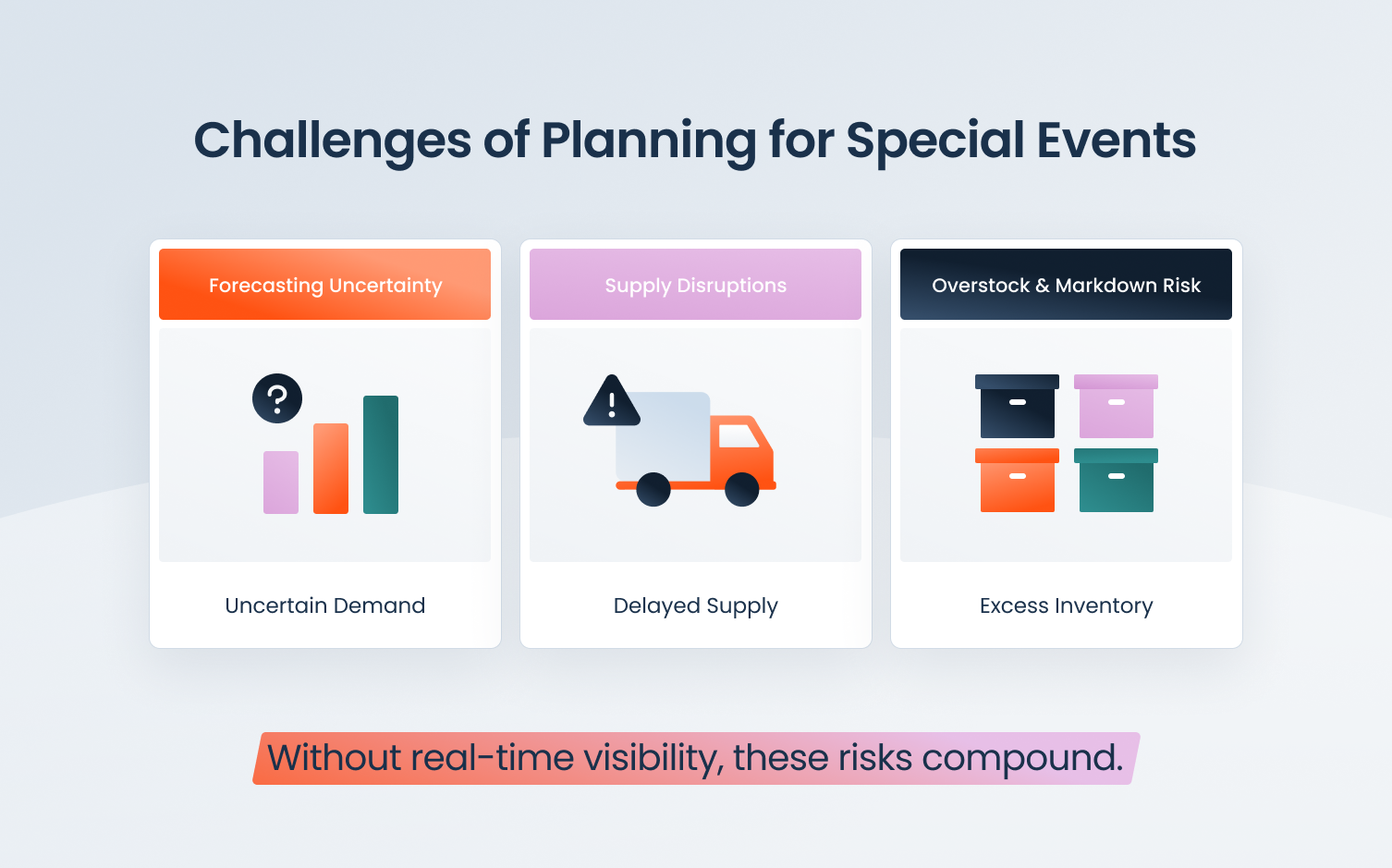
In the high-stakes retail landscape of 2026, many brands are falling victim to the Control Paradox. This phenomenon occurs when retailers believe that more rigorous, long-term planning leads to greater control. However, the more a brand locks itself into a rigid plan, the less it can react to the real-world demand shifts that define the modern market.
To survive, the retail industry must shift from “predictive guessing” to Adaptive Execution. By implementing Smart Replenishment, retailers can finally reduce overstock, eliminate dead inventory, and capture sales that were previously missed.
Smart Replenishment is the answer to a growing challenge in retail: balancing the unpredictability of consumer demand with the need for efficient inventory management. Through a blend of artificial intelligence (AI) and lean operational practices, retailers can break free from the constraints of traditional inventory planning.
What You Will Learn
- The Control Paradox: Why 2026 demand requires reaction speed over traditional forecast accuracy.
- Visual Sentiment: How multimodal AI identifies demand trends before keywords even begin to trend.
- Lean Allocation: How implementing the 50/50 Rule can reduce your overstock by an average of 33%.
- Financial Velocity: Methods for increasing inventory turnover using the Theory of Constraints (TOC).
Moving Beyond Obsolete Metadata and Hashtags
The Shift from Keywords to Visual Sentiment
Legacy inventory management systems were built on “filing cabinet” categorization, looking for specific words like “floral dress” to define demand. By the time a keyword trends, the peak opportunity has often passed.
A key challenge with this approach is historical blindness. Retailers often have strong reporting on current-season attributes but trends don’t announce themselves in advance. If you weren’t explicitly tracking a visual attribute before it became a “thing,” you can’t analyze its past performance. And if you haven’t thought to define it yet, you won’t catch it early on the way in. This creates a constant lag: you can only measure what you already knew to look for.
In 2026, Onebeat leverages Visual Sentiment, utilizing Artificial Intelligence in Retail to analyze the actual aesthetic of trending media, such as videos and images. Instead of relying on predefined labels, AI identifies emerging patterns in color, silhouette, texture, and style—before they’re named or categorized
This allows brands to move toward “live stream” interest graphs, anticipating demand shifts before a single search is even typed. This approach gives retailers the agility to forecast demand accurately and replenish stock in real time.
By shifting from old-school keyword categorization to visual-based demand forecasting, retailers can capture trends early and prevent the overstocking or understocking of inventory.
The Anatomy of Smart Replenishment
Smart replenishment is an AI-driven strategy that replaces manual, gut-instinct reordering with data-driven precision. The goal is to replace static “Min-Max” buffers with Dynamic Targets that adjust daily based on actual sales and real-time interest signals.
Traditional methods, whether Min/Max or forecast-based, are all trying to balance inventory cost with the risk of lost sales. Min/Max in particular forces planners to guess the right inputs to achieve that outcome.
AI shifts the focus. Instead of tuning parameters, retailers can define the outcome they want, like higher availability or better sell-through, and let the system continuously adjust inventory targets to get there.
The result is smarter, more responsive replenishment without relying on static rules or assumptions.
Lean Allocation and Flexible Stock Deployment
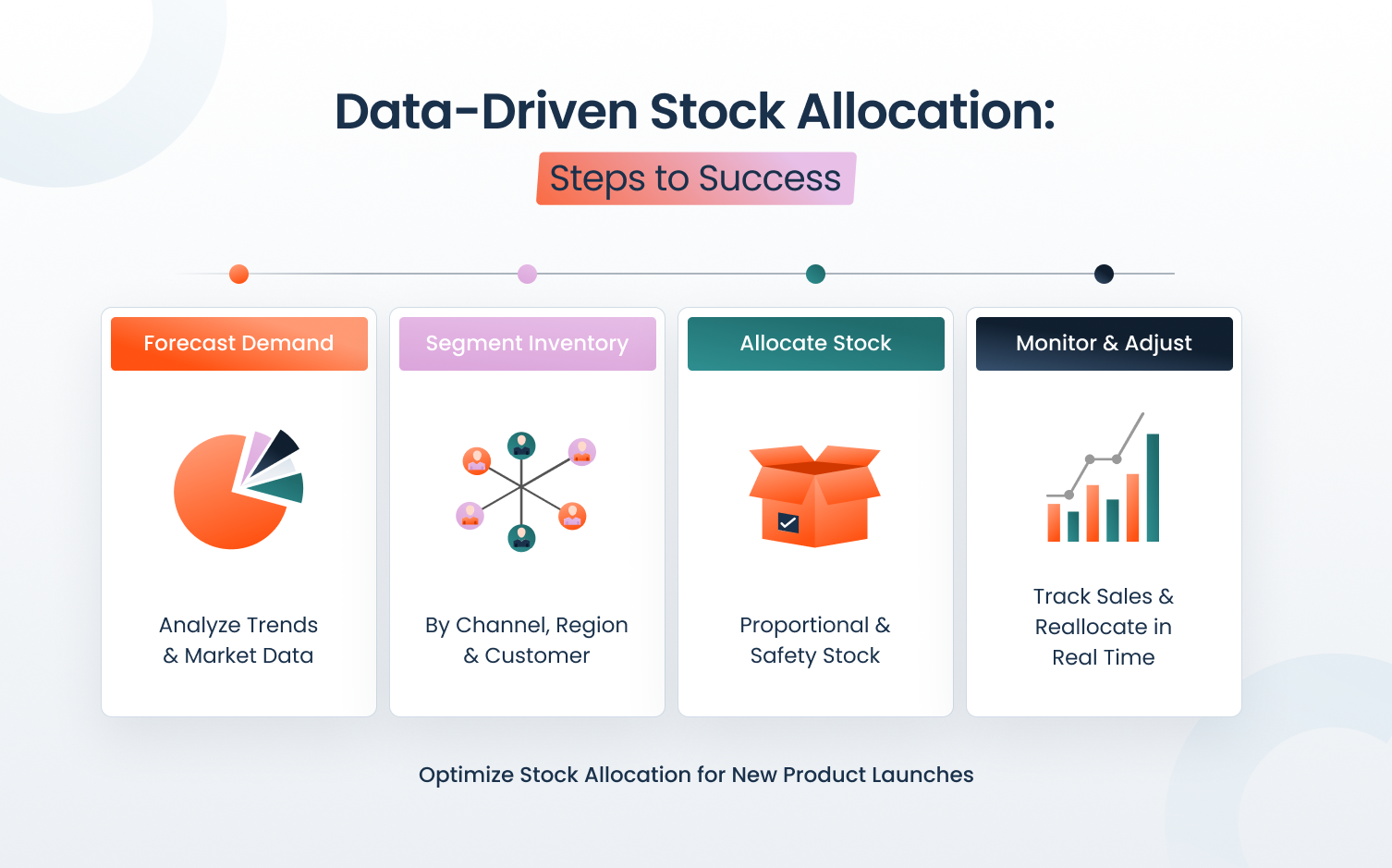
Traditional retail planning often involves pushing a large percentage of stock upfront, which can lead to overstock in some locations and “Stock Out” signs in others. Lean Allocation offers a more flexible alternative:
- Commit only part of the seasonal stock pre-season, based on the item.
- Keep a meaningful portion “liquid” in a central hub.
- “Pull” inventory toward high-performing stores mid-season based on proven real-time demand.
The key is not a fixed split, but adaptability. Some items may justify a higher upfront allocation, while others benefit from holding back inventory until demand is clearer.
This shift allows retailers to ensure the most popular products are available where they’re needed most, cutting overstock and improving profitability.
Find out how much cash you can free up in one season.
Daily SKU-Store Rebalancing
Managers must treat global inventory as one unified pool. Through daily SKU-store rebalancing, AI signals move Stock Keeping Units (SKUs) between stores, ensuring that products are located where customers are currently shopping, rather than where a month-old forecast predicted they would be.
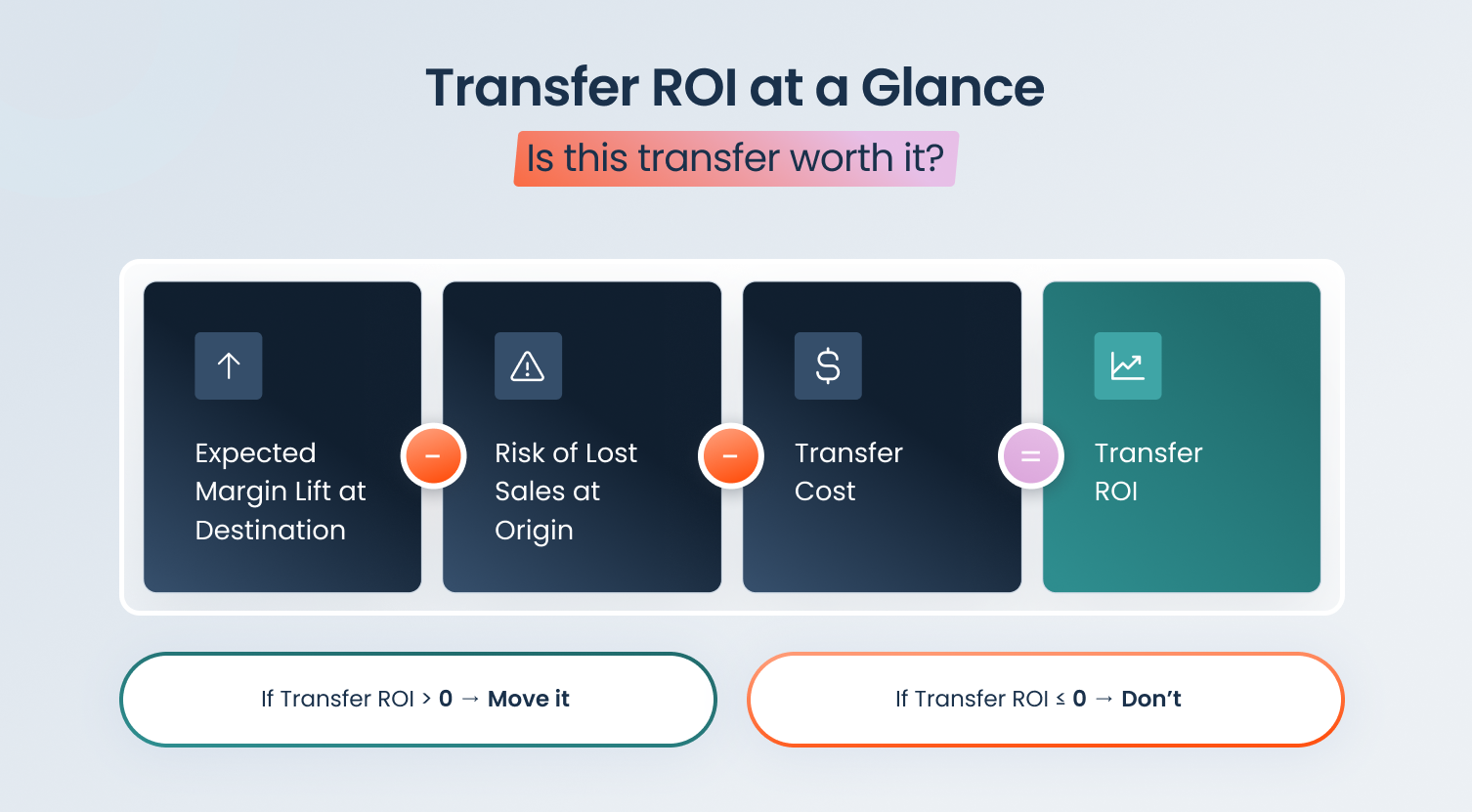
The key shift is understanding that the value of a unit is not just its ticket price, but the likelihood it will sell where it sits. A product with a 10% chance of selling in one store and a 90% chance in another is effectively far more valuable in the second location.
By continuously repositioning inventory based on real-time demand, retailers can unlock that value, reduce dead stock, and increase the responsiveness of the entire operation.
The Heritage of Flow: Theory of Constraints (TOC)
Onebeat’s methodology is rooted in the Theory of Constraints (TOC), a management philosophy developed by Dr. Eliyahu Goldratt. TOC focuses on identifying and addressing the “bottleneck” in a system – the part of the process that limits overall performance. In retail, this bottleneck is often trapped inventory, where stock isn’t flowing to where it’s needed most.
By synchronizing the entire supply chain to solve this bottleneck, retailers can prioritize inventory turnover and throughput rather than focusing solely on local store “accuracy.” This approach ensures that inventory is always moving toward where it is most likely to be sold, freeing up capital and improving overall efficiency.
Retailers today don’t need more data—they need intelligent AI-driven execution. That’s why we built Onebeat as a new kind of AI-powered retail operating system—one that translates data into real-time, revenue-driving execution.
– Dr. Yishai Ashlag, CEO of Onebeat
Legacy Planning vs. Onebeat Adaptive AI
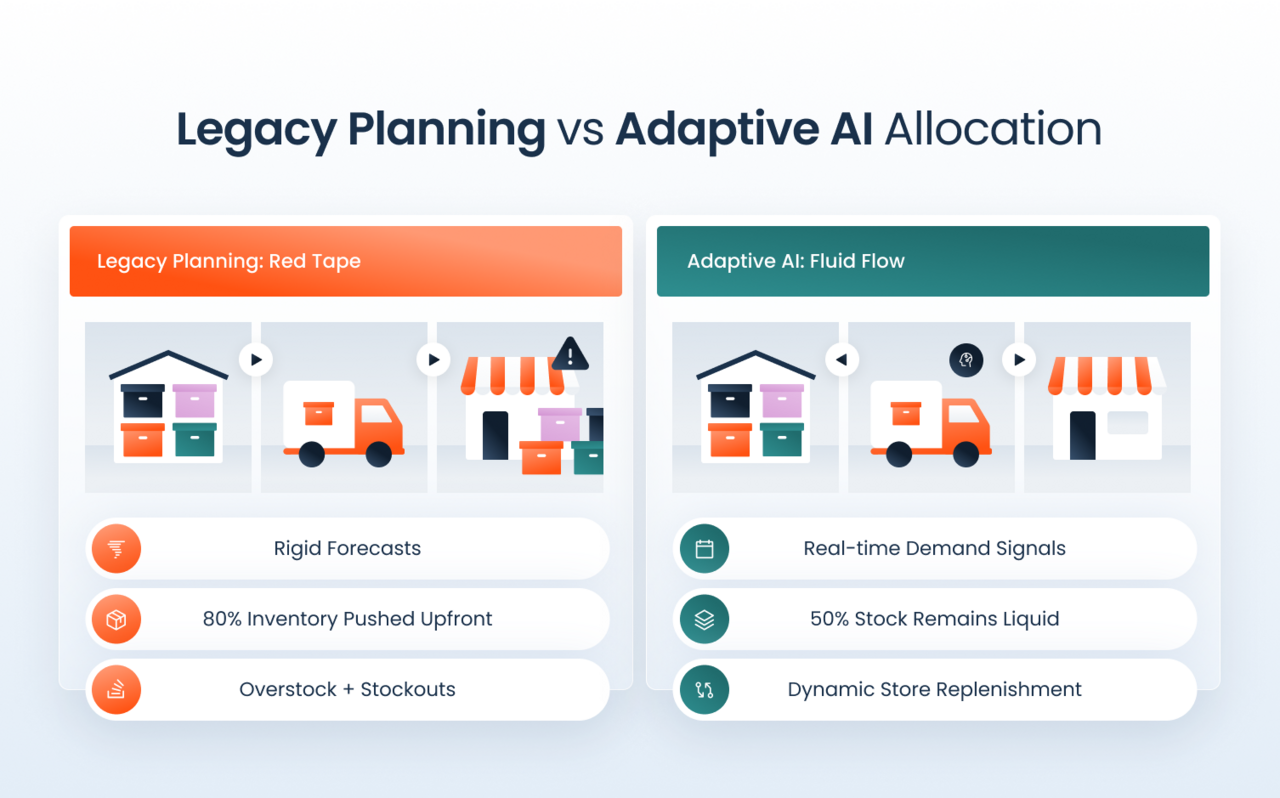
Traditional retail planning systems often rely on rigid forecasts and manual processes that lock retailers into “Red Tape.” In these legacy systems, a large share of stock is pushed upfront, often leading to overstock piles in some locations and stock-out signs in others.
In contrast, Onebeat’s adaptive AI-powered solution introduces “Fluid Flow,” where a significant portion of inventory remains liquid and can move dynamically based on real-time demand signals. In practice, this means not committing all inventory upfront, with the exact balance varying by item and context.
This flexibility allows retailers to continuously align inventory with demand, rather than committing too early to decisions they cannot easily change.
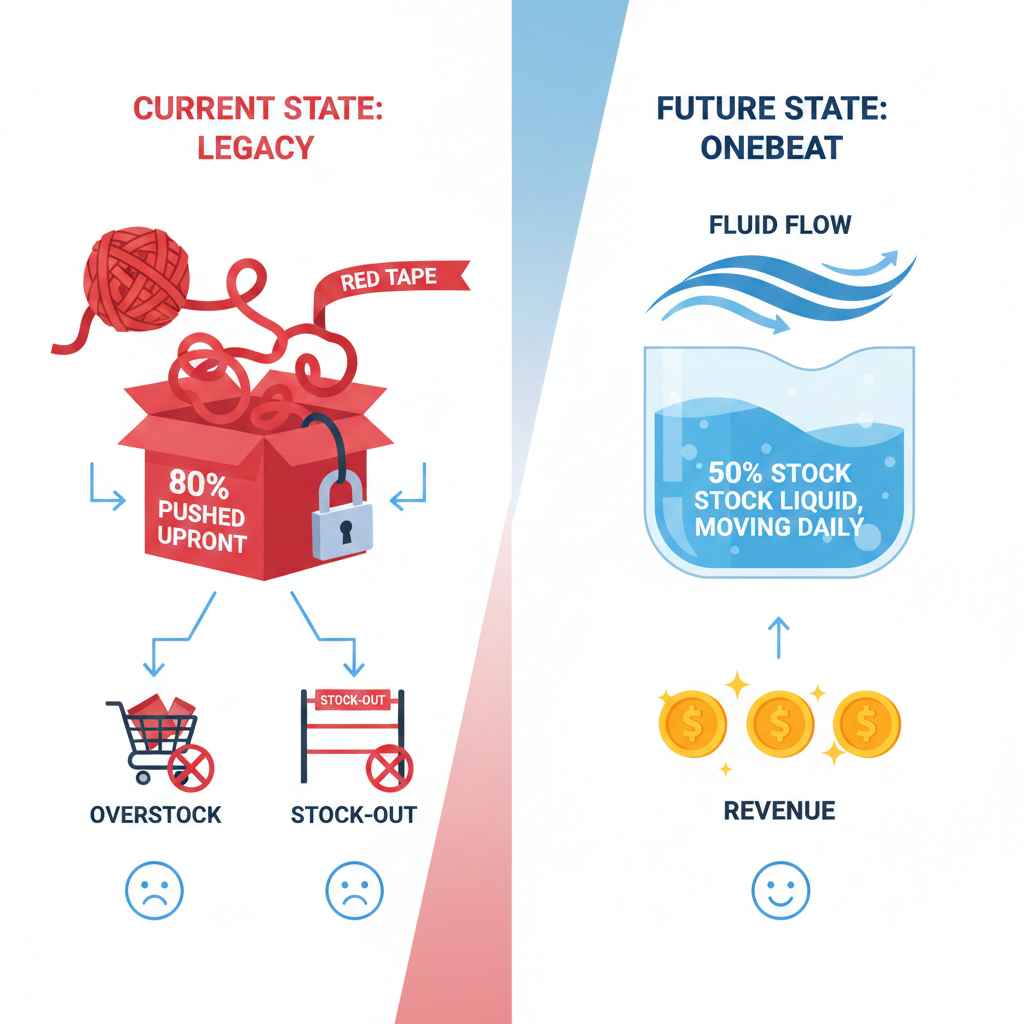
This approach ensures that retailers can optimize inventory placement, reduce waste, and capture missed sales in real time.
Key Takeaways & Executive Summary
- Waste is a Liability: Surplus inventory is reduced by an average of 33% by adopting Lean Allocation.
- Reaction > Prediction: The Control Paradox is solved by moving stock after real demand signals appear.
- Financial Velocity: High inventory turnover frees millions in working capital, fueling growth opportunities.
Ready to bridge the gap between strategy and execution?
FAQs
- How does smart replenishment reduce retail overstock?
Smart replenishment uses AI to set Dynamic Targets instead of static buffers. By analyzing daily sales and visual sentiment, it ensures stock is only sent to locations where demand is proven, reducing surplus inventory by 33% on average. - What is the “Control Paradox” in retail operations?
The Control Paradox is the phenomenon where traditional top-down planning decreases a retailer’s control. By committing to rigid, pre-season forecasts, brands lose the ability to respond to 2026’s decentralized, social-driven interest graphs. - Why is Onebeat different from traditional inventory management software?
Unlike legacy tools that focus on “predictive accuracy” (guessing), Onebeat uses the Theory of Constraints (TOC) to focus on “execution speed,” synchronizing global supply with local demand in real-time. - How does Lean Allocation improve inventory turnover?
Lean Allocation reserves 50% of seasonal stock in a central hub, allowing retailers to “pull” inventory to high-performing stores mid-season. This increases turnover and ensures the most popular SKUs are always in stock.

Onebeat