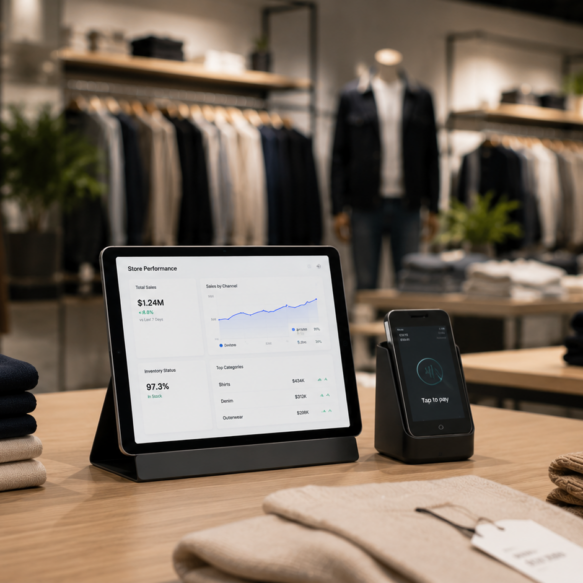
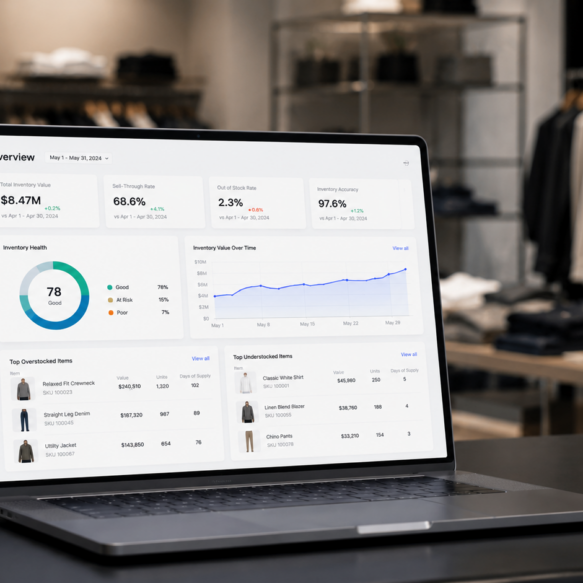
Retail digitization is reshaping how physical retailers respond to changing consumer behavior, improve customer experience, and generate higher ROI from their operations. Due to changing consumer demands and, most importantly, consumer behavior, the retail industry is evolving fast. A decade ago, we would see cities full of busy retail stores and consumers waiting for stock, even if it took a long time. Today, not only consumer purchasing power has become more volatile, but consumers have become more brand conscious. Hence, retailers need to tailor their retail management to understand; what motivates consumers and their purchasing decisions, what the current landscape of consumers looks like for physical retailers, and how technology is making all the difference in customer experience.
Why Physical Retailers Must Adapt to Changing Consumer Behavior
The retail industry has had its fair set of challenges pre and post-pandemic. In the current economic landscape, retail businesses struggle with balancing product prices amid surging inflation and ensuring the right product stays at the right place when consumers most need it. Retail owners have had to embrace digitalization and shape their business model into a more stable and profitable position.
How Retail Technology Creates Value for Modern Retailers
- Reinforce consumer relationships – Responding to their needs and understanding the product categories consumers focus on will help drive value for the price.
- Deliver a better customer experience – Knowing which product is needed in which store will improve customers’ perception of your retailer. Without predictive data insights about product assortment and stock effectiveness, retailers risk losing customers to competitors.
- Enable agility in retail operations – It is not just about making quick decisions or implementing new tools. Enabled by retail technology, retailers can build highly efficient retail workflows.
It is not just about making quick decisions or implementing new tools. Enabled by retail technology, retailers can build highly efficient retail workflows.
However, there are many technological solutions available today. Often retailers need help understanding how and what to choose. Let’s simplify it –
- Is there a need for technology to solve the problem? The need for technology in an environment must be evaluated thoroughly. The evaluation can be a direct comparison of the effectiveness of technology against the existing process. Technology should contribute to resolving the current inefficiencies entirely or reduce them.
- Can an alternative approach be taken to resolve the issue at hand? Instead of relying on technology to solve a problem, we should explore the possibility of modifying existing processes to achieve the desired outcome. This maximizes the efficiency of technology resources and allows for more flexibility and adaptability in problem-solving.
- Benchmark the expectations–Even technology needs to be benchmarked. Any technology is a combination of users and algorithms. There must be systems in place to benchmark and monitor expectations. A compliance mechanism must be maintained to identify effectiveness.
- Clarity of ROI against spend on technology–Apart from basic operational technologies, all additional technology solutions must contribute to helping a retailer increase sales. Hence, ROI visibility must be checked.
How Digital Retail Innovation Improves Supply Chain Management
When we discuss creating better customer experiences, the four key factors that should be considered are – optimizing inventory, increasing sell-through, improving store freshness, and deflating excess stock in stores. All these points in one direction – it is time to reset the traditional way of managing supply chains.
Consumer purchasing ebbs and flows with time. With their behavior becoming more complex to understand, an effective supply chain management strategy powered by digital retail innovation is as close as retailers can get to consumers today. That means offering the right product, price, and experience at the right time and place.
The Future of Physical Retail Is Technology-Driven
The bigger picture is for retailers to realize the potential of digital retail transformation. With the retail curve returning to normal, people are excited to re-discover the joy of brick-and-mortar shopping. At the same time, retailers have an opportunity to transform the shopper experience and maximize revenue simultaneously.
AI, Big Data, and DevOps automation are not simply technologies used to create digital retail software but are practices that should be deeply integrated into retail culture. They eliminate redundancy and errors in retail operations and help retailers focus on more creative and value-driven business tasks.
The winning way forward for physical retail owners is to leverage these next-gen retail innovations that will yield high ROIs and create sustainability in the retail business.Expert: Steve Jobs once said, “Technology by itself doesn’t make leaders. Technology only amplifies true leadership.”
The retail industry is evolving fast due to changing consumer demands. With their behavior becoming more complex to understand, an effective supply chain management strategy powered by digital retail innovation is as close as retailers can get to consumers today.
FAQs
How does digitization improve the retail customer experience?
Digitization helps retailers create faster, more connected shopping experiences across stores and online channels. Real-time inventory visibility, automated replenishment, and connected retail systems allow customers to access more accurate product availability information and smoother fulfillment options. Retailers can also respond faster to demand changes and improve service consistency across locations.
Why are retailers investing in digital transformation initiatives?
Retailers are investing in digital transformation to improve operational efficiency, increase inventory accuracy, and support better decision-making. AI-driven retail technology helps retailers reduce excess inventory, improve sell-through, and respond more effectively to customer demand patterns. These improvements can support stronger margins and measurable ROI over time.
What role does AI play in retail digitization?
AI supports retail digitization by helping retailers analyze real-time sales and inventory data to make faster operational decisions. Retailers can use AI-driven inventory optimization to improve replenishment, allocation, and product availability across channels. This helps reduce stock imbalances while supporting a more responsive customer experience.