Traditionally, retail store inventory management consists of three key components: Planning—where financial and merchandise strategies align; Buying—translating plans into a procurement schedule while accounting for vendors and retail supply chain optimization; and Allocating—distributing 70-80% of merchandise to stores based on warehouse constraints, store open-to-buy (OTB), and last-minute updates.
The challenge? Most inventory commitments are made before retailers receive their first real demand signals, leaving them with minimal flexibility to optimize sell-through using conventional retail store inventory systems.
On average, apparel retailers achieve a sell-through of 75%. However, pushing this number to 90% and beyond is crucial for financial success. Zara, for example, allocates only 50% of its merchandise ahead of the season and maintains a sell-through in the 90s. Planners can’t expect to allocate 80% of their merchandise in advance and still achieve a 90% sell-through. This gap illustrates the need for inventory optimization in the retail industry.
The benefits of moving to lean allocation are clear, but the transition is neither trivial nor easy. Allocating only 50% ahead of the season places greater strain on inventory management for retail operations, potentially overwhelming both merchandise and supply chain teams.
The total volume of replenished units may double, but the real challenge lies in the complexity of aligning supply with actual demand. This shift requires shipping smaller, more frequent quantities—something traditional inventory software for retailers aren’t equipped to manage on a daily basis.
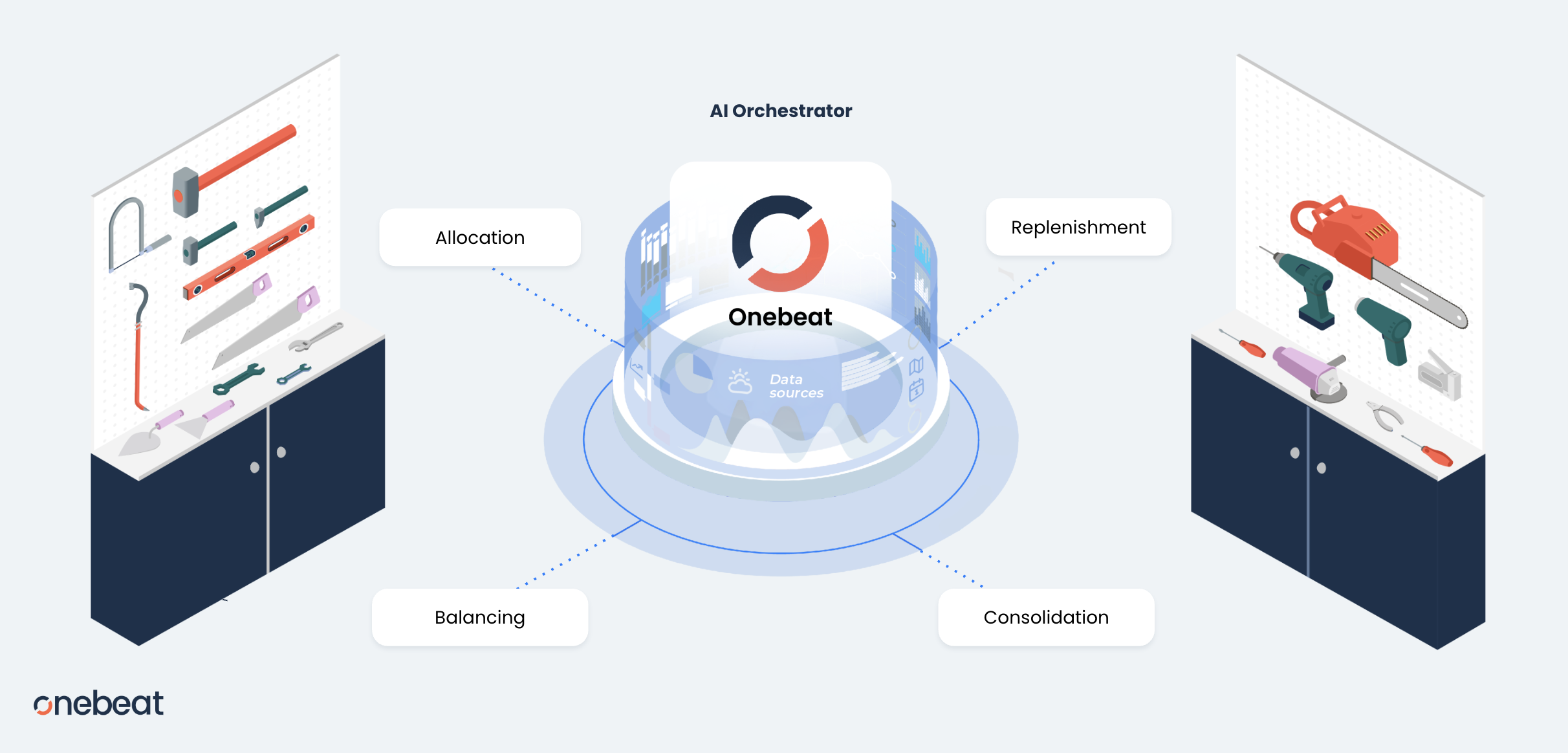
This is where AI inventory management software and automation make a difference. A smart retail store inventory software platform can incorporate merchandise and supply chain constraints while continuously learning demand patterns at the SKU level. It can track hundreds of thousands and even millions of SKU locations in real time, dynamically adjusting replenishment to maximize sell-through. This is inventory management beyond human scale.
Smart replenishment systems, whether semi-automated or automated, don’t replace the replenishment team. Instead, they change the nature of their work by providing inventory management tools that allow them to have a much greater impact on the flow of inventory throughout the product lifecycle—like optimizing size consolidations and liquidation.
Lean allocation and smart inventory management software for retail improve store inventory flow. A smoother flow means fewer daily conflicts: fewer instances where stores can’t receive new merchandise due to OTB limits, fewer dormant inventory issues, fewer stores struggling with display constraints, and less buildup of unsold products in the back room.
This approach isn’t limited to the apparel industry. We recently implemented it with Panasonic in their white appliances business in Japan, integrating lean manufacturing with lean allocation in the supply chain. The results: a 36% reduction in finished goods inventory for Panasonic, a decrease in mass retailers’ inventory from 26 days to 11 days, and an increase in same-day delivery rates from 60% to 95%.
Retail Operations Optimization Through AI
To succeed in modern retail, companies must adopt retail optimization software that supports inventory optimization for retail, including retail price optimization using machine learning. These AI-driven inventory management solutions are crucial for meeting demand in real-time, minimizing waste, and enhancing the shopper experience.
Whether you’re looking for inventory software for retail, or seeking complete optimization solutions for retail, now is the time to rethink your strategy. Powerful, automated systems can unify planning, buying, and allocating processes into a seamless, demand-driven engine.
About the Author
Onebeat co-founder and CEO, Yishai Ashlag, is an economist, author, and globally recognized authority in Theory of Constraints (TOC) methodology. A former partner and founding member of Goldratt Group and post-doctoral fellow at the Wharton School of Business, Ashlag brings academic acumen and decades of experience in management consulting to leading operational excellence and sustainable growth through innovation for Onebeat and retail at large.
Ashlag holds a Ph.D. in Economics from Bar Ilan University and is the author of acclaimed fiction and non-fiction titles on the topic of managing uncertainty, TOC, and more.

Onebeat